Skip to content

Our Story

We couldn’t find this guide anywhere. So we made it.

How a Punjabi wedding planned from 6,000 km away turned into the planning kit we wish we’d had — and the project we now share with every family that asks.

The first WhatsApp call

We started planning a Punjabi wedding from Norway. Time difference: four and a half hours. Distance to the venue: a little over 6,000 kilometres. Our first proper planning conversation happened at 11 PM our time, after a long workday, on a WhatsApp call with three aunties who all spoke at once.

By the end of that call we had a list of 47 things we hadn’t known existed. Pagh banan wale. Sahee chithi. Kangni de glass. Phulkari for the maiyan. Each of these had its own vendor, its own price range, its own weeks-of-lead-time, and nobody had it written down anywhere.

We had a list of 47 things we hadn’t known existed.

The Google searches that didn’t help

Search ‘Punjabi wedding checklist’ and you get the same five blog posts copied from each other. Generic. Hindi-leaning. Mostly aimed at families who are already in India, already know the rituals, and just need a wedding planner to fill in the blanks.

We didn’t need a Pinterest mood board. We needed someone to tell us: how many paghs? How early do we book the photographer? Which specific shop in Chandni Chowk does choora that won’t break? When does the maiyan happen relative to the choora ceremony? The internet had no answers.

The Delhi vendor walks

We flew in twice before the wedding to do vendor walks. Chandni Chowk for choora and lehengas. Chhatarpur for designer pieces. Dhan Mill for boutique outfits. Karol Bagh for jewellery. Each visit was 12 hours of walking, comparing prices, checking quality, and taking notes.

We learned which shops would inflate prices for diaspora customers (most of them), which ones were genuinely fair, and which ones did appointment-only consultations for serious buyers. We learned that the ‘discount’ a shopkeeper offers you the second time you walk in is not a real discount — it’s the price you should have paid the first time.

We compared photographer packages from 14 different studios in Amritsar, Chandigarh, and Delhi. We sat through 3-hour MUA trials. We tasted catering at four different venues. We took notes after every meeting because we knew we’d forget the details.

The ‘discount’ a shopkeeper offers you the second time you walk in is not a real discount — it’s the price you should have paid the first time.

Spreadsheets, currencies, and the 400-person guest list

Our budget tracker started as a basic Excel sheet. By month three it had 11 tabs: events, budget, guest list, shagun tracker, vendor contacts, payments made, payments owed, samaan checklist, song lists, photographer brief, and a master timetable. Half the entries were in INR, half in NOK, and we had a live FX cell at the top of every page.

Managing a 400-person guest list across two countries — with seating charts, RSVPs for four separate events, hotel block reservations, and shagun amounts to track afterwards — broke every wedding-planning app we tried. So we kept building the spreadsheet.

By the wedding week, that spreadsheet had become a small operating system. Family members would ask questions and we’d answer them by opening a tab.

The wedding actually happened

Five days. Sangeet on Day 0 because half the guests had to fly out early. Mehndi on Day 1 with 110 women and a singer who stayed until 1 AM. Maiyan and jaggo on Day 2 — chaos in the best possible way. Choora on Day 3, vidaai on Day 4 after the Anand Karaj, reception on Day 5 in a different city.

The spreadsheet held. We didn’t miss a single vendor payment, the milni went smoothly because we had a printed seating order, and the bride’s makeup team arrived at 4 AM exactly because we’d pinned them on it three weeks earlier.

It wasn’t perfect. Things went wrong. Live dhol ran out of energy at 1 AM. The doli was running 90 minutes late. Two of the kaleere broke during photos. But because every other moving part was tracked, we had the headspace to handle the emergencies in real time.

Realising every family does this from scratch

Within a year of our wedding, six different families in our extended circle started planning their own. Every single one of them asked us the same questions, in the same order, with the same panic. Some were diaspora. Some were in India. The questions were identical.

It became obvious that the knowledge problem wasn’t ours alone. It was structural. The information exists — but it lives in aunties’ heads, in shopkeepers’ verbal histories, in family WhatsApp groups, and in the lived experience of people who’ve already done it. There is no canonical source. So every family rebuilds it from zero.

That’s when we decided to package it up properly.

The knowledge exists — but it lives in aunties’ heads. So every family rebuilds it from zero.

What we built, and who we built it for

The Punjabi Wedding Organizer is the guide we wish we’d had. Every checklist comes from a real wedding we either planned or were intimately involved in. Every vendor recommendation is one we used or seriously considered. Every budget range is one we tracked across actual line items in INR and NOK.

It’s built for diaspora families planning weddings in Punjab, but it works just as well for families already in India who want a structure to follow. It’s built for grooms’ sides as much as brides’ sides. It’s built for couples doing the planning themselves and for parents doing it on their behalf.

What it isn’t: a luxury wedding magazine. A Pinterest dream board. A generic ‘Indian wedding’ template. We are specific. We focus on Punjabi Sikh weddings because that’s what we know. We’d rather be the deepest guide for one tradition than a shallow guide for all of them.

What’s next

Right now this is an Excel-based planning kit, with shopping guides, vendor lists, and a songbook. Over the next year we’re building it into a proper web app — drag-and-drop timetables, integrated guest list and RSVP system, multi-currency budget tracker, and a wedding website builder that flows directly into your guest list.

We’re also planning to expand: a podcast with vendors and previously-married couples, a printable booklet of Punjabi wedding songs in Gurmukhi and transliteration, and a community space for diaspora families to compare notes.

If you’re planning a wedding right now and any of this resonates, please reach out. We read every email. The most valuable thing we get from this project isn’t revenue — it’s the chance to make the next family’s journey easier than ours was.

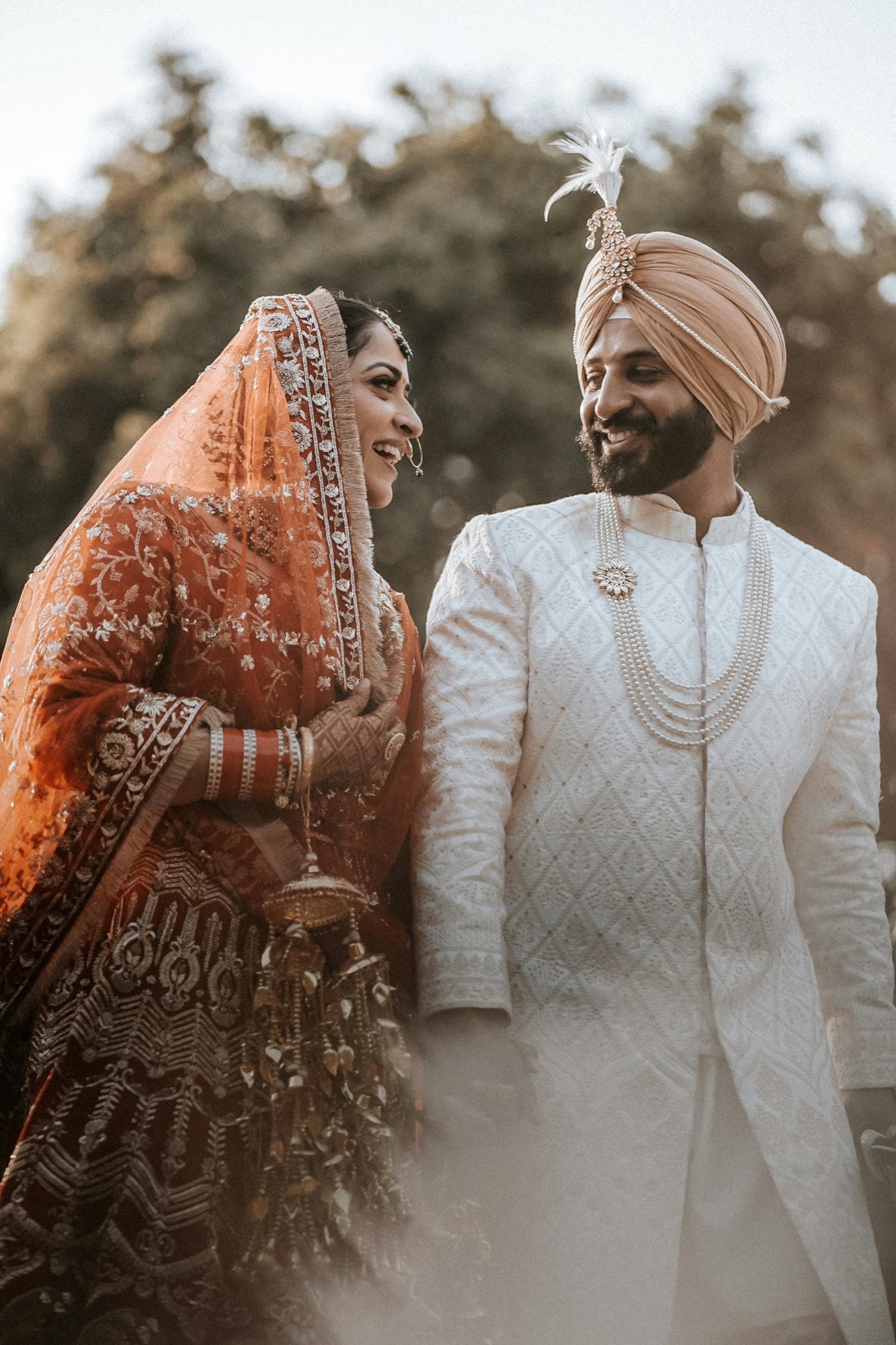
The two Punjabi sisters who built the Punjabi Wedding Organizer

The two of us

Made with love & chai

Built by two Punjabi sisters

Not a brand. A family project.

One of us did the spreadsheets, the vendor walks, and the hard math on the budget. The other knew the songs, the samaan, and which aunty to call for which question. Between us we had what every diaspora family needs and cobbles together piece by piece — and we wrote it down.

We’re a Punjabi family spread across Canada, the USA, England, and Punjab — every cousin who’s gotten married in the last few years has fed back into this kit. Different cities, different gurdwaras, different vendor networks, same rituals. So whether you’re planning from Toronto, Birmingham, the Bay Area or Ludhiana, the checklists already account for what you’ll actually run into.

Every checklist on this site has been used in a real, recent wedding we were part of. Every shop, every vendor, every song was vetted by someone in our family before it went in. If something is missing or feels off, write to us and we’ll fix it for the next family.

How we work

What you can expect from us

Specific over generic

We name shops, list price ranges, and tell you which photographer style to ask for. No ‘do your research’ filler.

From real weddings

Every checklist on this site has been used in an actual wedding we were part of — not made up to fill a template.

No hidden affiliate spam

If we recommend a vendor, it’s because we used them or seriously considered them. We disclose the rare paid relationship clearly.

Updated, not abandoned

Vendors change, prices shift, and traditions evolve. We update our guides based on every wedding our community plans.

See what’s in the kit

The Punjabi Wedding Organizer is the working version of everything we learned — packaged for the next family.